OSTEOPATHY AND TAPING
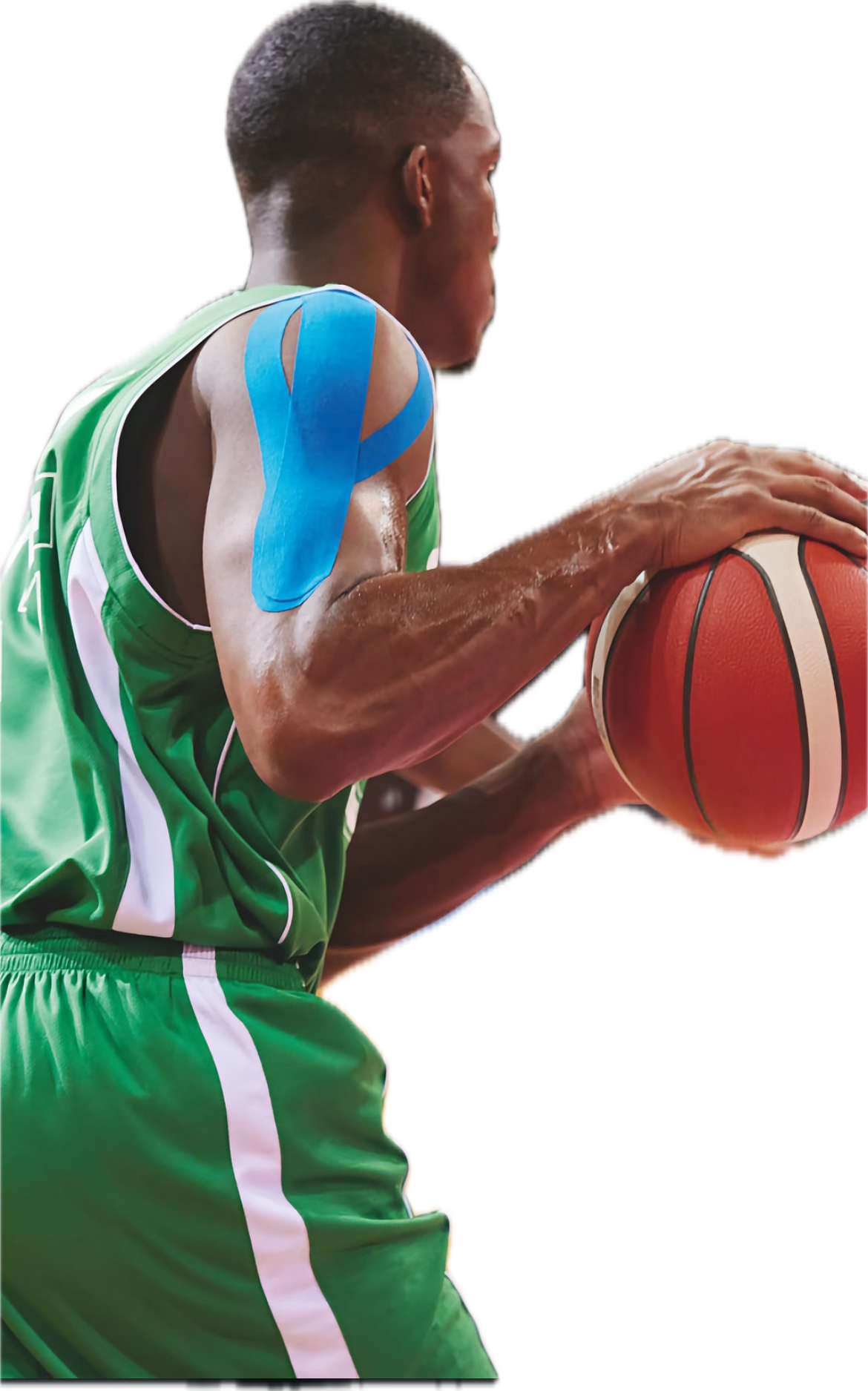
Neuromuscular Taping (Kinesio Taping) : A Therapeutic Tool in Osteopathy
You've probably seen these colorful, elastic adhesive strips often applied to athletes or patients undergoing rehabilitation. This is Neuromuscular Taping , more commonly known as Kinesio Taping , a non-pharmacological support technique that is increasingly being integrated into manual therapy approaches.
Genesis and Fundamental Principles
Kinesio taping was developed in the 1970s by Dr. Kenzo Kase , a Japanese chiropractor. His goal was to create a method of supporting soft tissue (muscles, fascia, joints) that would not impede range of motion, unlike traditional rigid taping. His vision was to facilitate the body's natural healing processes by providing dynamic, continuous support. For an in-depth exploration of the history and principles of this method, the Kinesio Taping Association International website is a valuable resource.
Mechanisms of Action and Clinical Indications of Taping
The application of Neuromuscular Taping is based on several physiological mechanisms which contribute to its therapeutic effects:
- Non-Restrictive Muscle and Joint Support: Taping is applied to replicate the elasticity of human muscle, allowing dynamic support without limiting joint mobility. It can be used to facilitate or inhibit muscle activity depending on the application technique.
- Improved Circulation and Lymphatic Drainage: The tension exerted by the band slightly lifts the skin, creating more space in the subcutaneous tissue. This decompression can improve blood microcirculation and promote lymphatic drainage, helping to reduce edema and inflammation.
- Pain Modulation: By reducing pressure on nociceptors (pain receptors) under the skin and acting on the nervous system, taping can contribute to a significant reduction in pain perception. A meta-analysis published on PubMed highlighted the effectiveness of kinesio taping in improving pain and functional disability in various musculoskeletal disorders.
- Optimizing Proprioception: Stimulating the skin and mechanoreceptors through the tape provides constant sensory feedback to the central nervous system. This can improve body awareness, joint stability, and motor coordination. Research published on PubMed continues to explore the impact of taping on proprioception.
Integration of Taping in Osteopathy Consultation
In my osteopathic practice, I sometimes use Neuromuscular Taping as a therapeutic complement to manual sessions. Its application allows you to:
- Prolong the Benefits of Osteopathic Treatment: Maintain the effects of the structural and functional corrections made during the session.
- Stabilize and Protect a Weakened Area: Provide functional support to a joint or muscle group requiring post-treatment assistance.
- Support Functional Recovery: Facilitate rehabilitation and optimize performance in athl